

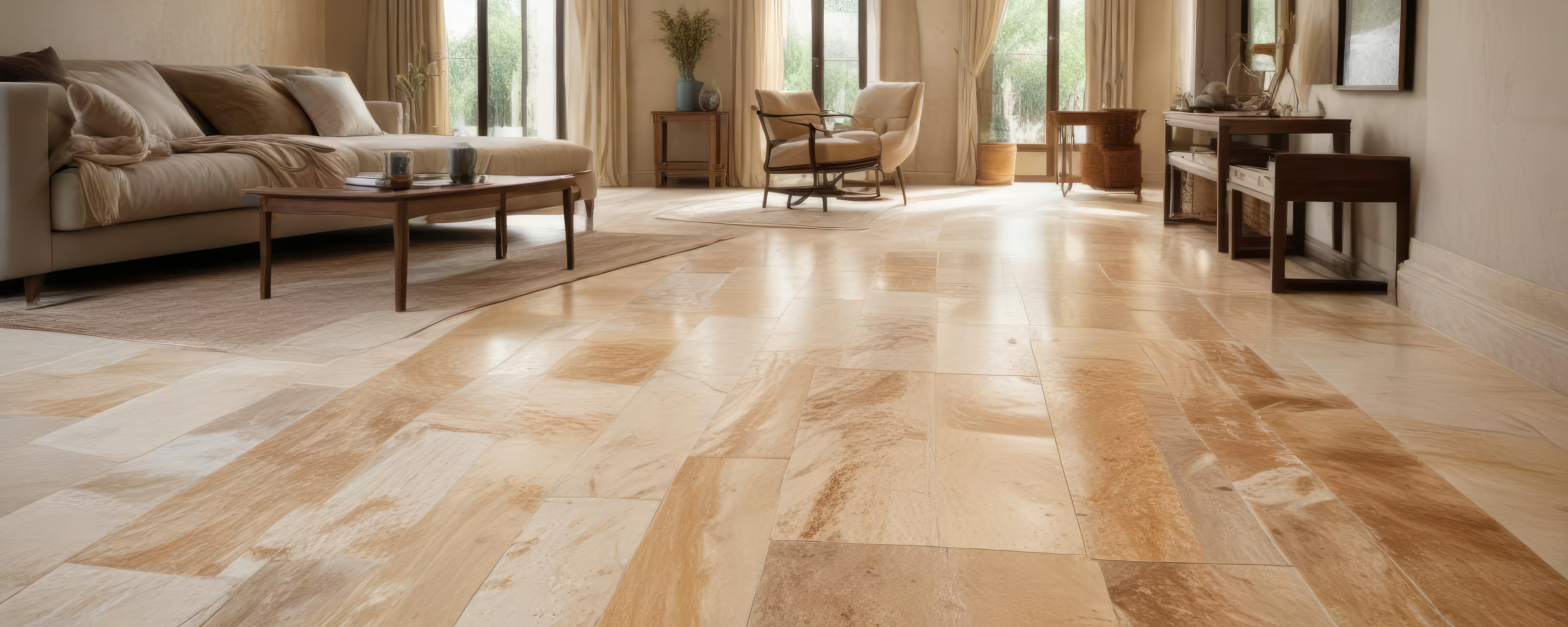
In-floor radiant heating completely changes how winter feels inside your Calgary home, but pairing it with the wrong surface material limits its efficiency and strains your flooring over time.
Radiant systems warm living spaces from the ground up, turning your floors into the primary heat source. Wood-look tile and real hardwood both deliver the rich, organic visual warmth of natural wood, but each material responds differently to heating cables, hydronic tubing, and dry prairie air.
Your final decision comes down to how quickly you want heat to enter the room, the specific level of your home you plan to renovate, and how your family lives every day.
Thermal Performance Defines Daily Heating Efficiency
The physical density of your flooring directly controls how fast warmth transfers from the subfloor into your living areas. Dense materials conduct heat quickly, while natural wood acts as an insulator that slows thermal transfer down. Understanding these physical properties helps you set realistic expectations for system responsiveness during deep winter freezes.
Wood-Look Tile Transfers Heat with Maximum Speed
Dense porcelain tile conducts and retains heat better than almost any other residential flooring material. When your in-floor heating activates, tile absorbs the thermal energy quickly and radiates it evenly across the entire surface. This rapid conductivity helps your heating system warm cold rooms faster on mornings when outside temperatures plunge overnight. The dense structure holds onto that warmth long after the system cycles off, keeping main-floor great rooms and drafty entryways comfortable for hours. You get steady heating efficiency without worrying about thermal resistance blocking the system output.
Hardwood Moderates Warmth with Natural Insulation
Natural timber acts as a natural insulator, which means real wood slows the upward movement of heat into your living spaces. Solid hardwood expands and contracts too aggressively over heat pipes, so engineered hardwood with a cross-ply core is the standard choice over radiant systems. The wood takes longer to feel warm on your bare feet compared to tile, and your heating system must run longer cycles to bring the room up to temperature. Once engineered hardwood reaches that target warmth, it provides a gentle, comfortable surface underfoot that never feels scorching hot. You must maintain strict surface temperature limits, usually around 27°C (80°F), to protect the factory finish and internal adhesives from drying out.
Local Climate and Layout Factors Shape Your Choice
Calgary features distinct seasonal shifts that put unique physical demands on heated floors. Dry indoor winter air combined with rapid temperature swings caused by incoming Chinook winds tests the dimensional stability of every material you install.
Below-Grade Basements Favor Porcelain Performance
Walkout basements and lower-level family rooms facing coulees or river ravines sit directly over concrete slabs that hold ground chill. Wood-look tile paired with in-floor heat creates an impenetrable barrier against cold concrete while giving the space the relaxed look of wide-plank timber. The porcelain makeup ignores the ambient moisture shifts common to basement foundations during spring snowmelts. In busy basement rumpus rooms where kids run in from the backyard with snow on their boots, heated tile dries moisture instantly without surface staining.
Main Living Areas Benefit from Organic Wood Texture
Open-concept main floors in communities like Nolan Hill or Auburn Bay often prioritize tactile comfort, acoustic balance, and visual flow into adjacent rooms. Engineered hardwood over radiant heat softens footsteps and absorbs sound better than tile across large, vaulted living areas. The natural grain brings genuine warmth to neutral, mountain-transitional palettes featuring creamy walls and textured wool rugs. You gain the cozy luxury of warm wood floors on freezing January mornings while keeping your overall interior design cohesive from the front foyer to the formal dining space.
Surface Selection Guide for Your Floor Plan
Use this practical guide to decide which material matches your floor plan, heating system, and daily habits:
Choose wood-look tile if you want maximum heating efficiency, rapid heat transfer, and complete protection against melting snow, muddy dog paws, and winter road salt in high-traffic zones.
Choose wood-look tile if you are finishing a basement concrete slab or a primary ensuite bathroom where water resistance and fast-warming floors matter most.
Choose engineered hardwood if you prioritize natural underfoot softness, quieter acoustics across large main-floor spaces, and an authentic wood grain that flows continuously into unheated bedrooms.
Choose engineered hardwood if your heating system includes reliable floor-temperature sensors and an integrated whole-home humidifier that maintains consistent indoor moisture levels all winter long.
Find the Ideal Wood-Look Tile or Hardwood Floor
The right surface for your radiant-heating system needs a careful balance of thermal conductivity, seasonal stability, and personal style. Our team brings decades of local experience to every project, helping you choose durable surfaces that stand up to local winter conditions and dry indoor air. You can compare wide-plank engineered oak alongside realistic textured porcelain planks under proper lighting to see how the finishes complement your home.
Visit our North Calgary showroom near Symons Valley or our South Calgary showroom along the 130th Ave Southeast corridor to review full-scale displays in person, or contact us to arrange an in-home mobile showroom appointment.


